

Pedestrians and scooter riders share some of the busiest and most unpredictable streets in Louisiana. In New Orleans, especially, where narrow streets, heavy foot traffic, streetcars, tourists, and potholes all compete for space, accidents can happen fast, and determining fault isn’t always straightforward.
Whether you were walking, riding a scooter, or struck by one, you need to understand your rights, protect your claim early, and speak with an attorney who knows how these cases work locally.
For more than 40 years, the team at Morris Bart has helped injury victims across New Orleans and Louisiana recover compensation after pedestrian and e-scooter crashes. Below is what to do next and how fault is determined under Louisiana law.
What to Do Immediately After a Pedestrian or E-Scooter Crash
Accidents happen fast, and many victims feel disoriented in the moments afterward. Your decisions during the first hour can make a meaningful difference in your physical and financial recovery.
Seek Medical Attention
Always get evaluated by a medical professional, even if you feel okay. Many injuries common in pedestrian and scooter crashes, including concussions and internal injuries, often show delayed symptoms. Early medical documentation protects your health and strengthens your claim.
Document the Scene
Evidence disappears quickly, especially in a city like New Orleans, where conditions can change on a dime. If you can safely do so, take photos and videos focused on:
- Your injuries
- Any scooter or vehicles involved
- Road conditions and sidewalk defects
- Traffic signals, crosswalks, and signage
- Potholes, broken sidewalks, uneven pavement, or construction zones
These details matter, especially in New Orleans, which has well-documented infrastructure challenges. The city maintains thousands of miles of roadway, much of which requires repair, and these poor road conditions can influence fault.
If a rental scooter was involved, take screenshots:
- Scooter ID or QR code
- Ride start and end times
- App status
- Error messages
Request a Police Report
Louisiana’s Crash Report form documents the location, conditions, involved parties, and whether a driver violated a traffic law. This record is often central to proving fault.
Preserve All Relevant Records
Keep all:
- Medical bills and treatment records
- Therapy and rehabilitation receipts
- Proof of lost wages
- Rental receipts or repair bills
- Communications with insurers or scooter rental companies
These records form the backbone of your claim, and every document supports both the extent of your injuries and the financial impact they’ve had on your life.
Report the Incident
Notify the appropriate parties as soon as possible. If you are riding a rental scooter, notify the rental provider through their app or support line. If a motor vehicle plays a role, report the accident to your insurance company, but do so carefully. Avoid admitting fault or guessing what happened. Document that you gave notice and keep records of all communications.
Avoid Common Mistakes
- Saying “I’m fine”
- Speculating about fault
- Agreeing to a recorded statement
- Signing releases without an attorney
Next steps matter. The sooner you speak with a lawyer, the easier it is to protect your claim.
Understanding Fault in Louisiana: Who Can Be Responsible?
Fault is the central issue in pedestrian and scooter cases. The physical setup of New Orleans often creates situations where more than one person plays a role in what happened.
Louisiana’s Current Comparative Fault Rule
The 2026 Rule Change: Modified Comparative Fault
Under House Bill 431, Louisiana will move to modified comparative fault beginning January 1, 2026. This change is significant as the new rule means that if you’re 51% or more at fault, you will be barred from recovering any compensation at all.
Pedestrian and scooter accidents often involve disputed accounts, poor road conditions, and multiple parties. Establishing fault clearly and early will be even more important in moving forward.
Who May Be Liable in a Pedestrian or E-Scooter Crash?
Depending on the facts of your case, fault may lie with several different parties.
Vehicle Drivers
A driver may be responsible if they:
- Failed to yield in a crosswalk
- Make unsafe turns
- Speed
- Drive while distracted
- Run traffic signals
These actions are documented risk factors in pedestrian crashes. In areas with heavy tourism and dense pedestrian and scooter activity, the likelihood of a collision increases.
Scooter Riders
A scooter rider may share fault if they:
- Ignore traffic rules and signals
- Ride on sidewalks where prohibited
- Weave through crowds
- Operated the scooter recklessly, including traveling too fast for conditions
Scooter Rental Companies
A rental company may be liable if a crash results from:
- Brakes failures
- Throttle sticking
- Battery failure
- Poor maintenance
- Ignored damage reports
According to general product liability principles and safety guidelines, electric scooter companies are required to maintain their fleets in a safe working condition. If the scooter malfunctions during a ride, it is important to preserve the device’s condition and report the issue immediately through the app.
The City or Municipality
The city may be responsible if poor infrastructure contributed to the incident. Examples include:
- Potholes
- Broken sidewalks
- Faded crosswalk markings
- Missing signs
- Poor lighting
- Unmarked construction hazards
Pedestrians
A pedestrian may share fault if they:
- Cross outside of a crosswalk
- Step into traffic unexpectedly
- Ignore walk signs
- Are distracted by a phone
Under Louisiana’s fault system, these actions may reduce compensation but do not prevent recovery unless the pedestrian is more than 50 percent responsible after 2026.
Typical Scenarios and Fault Allocation
Understanding how fault is determined in common crash scenarios can help you recognize the strengths and weaknesses of your case. Here are examples of how fault may be evaluated.
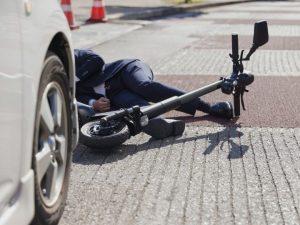
Vehicle Hits Scooter Rider in a Crosswalk
- Driver often at fault for failing to yield
- Scooter rider may share responsibility if riding against the light
Scooter Rider Collides with a Pedestrian
- Scooter rider often at fault for unsafe operation
- Pedestrian may share fault if stepping out suddenly
Scooter Rider Crashes Because of a Pothole
- City may be liable
- Scooter company may also share responsibility if the device was difficult to control
Rental Scooter Malfunctions
- Scooter company or manufacturer may be responsible for mechanical defects
Special Legal Issues in E-Scooter and Pedestrian Collisions
Louisiana Scooter Laws
Louisiana allows electric scooters with certain requirements. Under Louisiana Revised Statutes §32:300.1.1, an e-scooter must weigh less than 100 pounds and have a maximum speed of 20 miles per hour. Riders must also follow specific safety rules, including:
- Working lights, brakes, and reflectors
- Riders under 18 must wear helmets
- Riders must follow the same traffic laws as bicycles and vehicles
- Riding on sidewalks is restricted in many areas
Failure to follow these rules can impact fault, especially under the 2026 modified fault rules.
Insurance and Coverage Complications
Insurance coverage depends on who is involved. Possible sources of compensation include:
- Auto insurance policies
- Scooter rider’s personal liability coverage
- The scooter company’s commercial coverage
- The municipality of New Orleans for infrastructure hazards
- Your uninsured or underinsured motorist coverage
Electric scooter companies often include liability waivers in their user agreements. However, these waivers do not always apply in cases of defective equipment or negligent maintenance.
Statute of Limitations in Louisiana
Louisiana updated its personal injury filing deadlines in 2024. According to Louisiana Civil Code §3493.1, most personal injury claims now have a two-year time limit. The two-year period begins on the date of the accident, and if you miss this deadline, you may lose the right to file a lawsuit and pursue compensation.
However, older accidents, if they occurred before July 1, 2024, follow the previous one-year rule. Because of this, it is important to speak with an attorney as soon as possible, so you understand which timeline applies to your case.
What Can You Recover After a Pedestrian and E-Scooter Accident?
Victims of pedestrian and scooter crashes may qualify for compensation for:
- Medical bills
- Future treatment
- Lost wages
- Reduced earning ability
- Pain and suffering
- Emotional distress
- Physical therapy or rehabilitation
- Assistive devices
- Property damage, including broken phones or personal items
- Loss of enjoyment of life
Your attorney will document these losses and calculate the full value of your claim.
How Morris Bart Personal Injury Lawyers Can Help
Our team of attorneys investigates every aspect of your accident, including:
- Collecting police reports, scooter logs, witness statements, and medical records.
- Inspecting roadway hazards and preserving video or photo evidence.
- Identifying all responsible parties.
- Working with your medical providers to document your injuries and future needs.
- Negotiating with insurance companies and scooter providers.
- Filing your case on time and handling communication on your behalf.
We understand how pedestrian and scooter crashes happen in New Orleans, including high-risk areas like the French Quarter, and use this local insight to strengthen your case.
Contact Morris Bart for a Free Case Evaluation
Pedestrian and scooter accidents create unique challenges. Fault may be shared, insurance policies may overlap, and Louisiana’s rules are changing in 2026. Early action is the best way to protect your rights and preserve evidence.
If you were injured as a pedestrian or scooter rider, contact Morris Bart today for a free consultation. Our team is ready to answer your questions and help you pursue the compensation you deserve.
Questions?Call us, Louisiana.
(504)-613-4771