




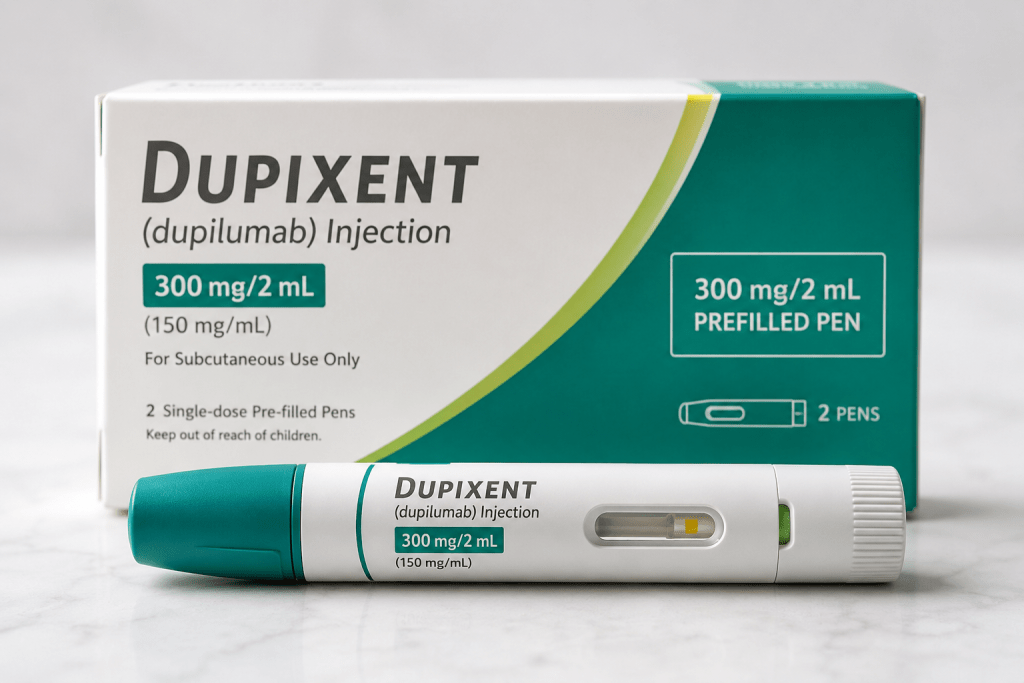
Dupixent is a widely used prescription medication used to treat eczema, asthma, chronic rhinosinusitis with nasal polyps, eosinophilic esophagitis, prurigo nodularis, COPD, chronic spontaneous urticaria, and other inflammatory conditions. However, recent lawsuits allege that Dupixent may cause, accelerate, or worsen a rare form of cancer known as Cutaneous T-Cell Lymphoma, or CTCL.
CTCL is a type of non-Hodgkin lymphoma that primarily affects the skin. Symptoms can resemble eczema or other chronic skin conditions, which may delay diagnosis. Lawsuits against the manufacturers of Dupixent allege that Sanofi, Regeneron Pharmaceuticals, and related entities failed to adequately warn patients and healthcare providers about this serious potential risk.
What Is Dupixent?
Dupixent, also known by its generic name dupilumab, is an injectable prescription medication used to treat several inflammatory conditions. It works by targeting certain immune system pathways involved in inflammation.
Many patients are prescribed Dupixent for moderate-to-severe eczema, asthma, chronic sinus inflammation with nasal polyps, and other conditions when traditional treatments have not worked well enough. Because Dupixent is often used long-term, patients and doctors rely on complete safety information when deciding whether the drug is appropriate.
Have There Been Safety Concerns About Dupixent and CTCL?
Unfortunately, yes. Lawsuits and medical reports have raised concerns about a possible connection between Dupixent use and Cutaneous T-Cell Lymphoma. Some claims allege that Dupixent can cause CTCL, accelerate an existing undiagnosed CTCL, or mask symptoms that lead patients and doctors to believe the condition is simply eczema or another inflammatory skin disorder.
Plaintiffs in these lawsuits allege that the manufacturers knew or should have known of the potential CTCL risk but failed to provide adequate warnings to consumers and healthcare providers.
Have There Been Lawsuits Tied to Dupixent?
Yes. Dupixent lawsuits have been filed by individuals who used the drug and were later diagnosed with CTCL or related T-cell lymphoma conditions. These lawsuits generally allege that the manufacturers failed to warn about the risk of CTCL and that patients may have avoided serious harm if stronger warnings had been provided.
These cases are still developing, but the litigation has already reached an important stage in federal court.
Is There a Dupixent MDL?
Yes. The Judicial Panel on Multidistrict Litigation created an MDL for Dupixent (Dupilumab) Products Liability case in the United States District Court for the District of New Jersey.
The JPML assigned the litigation to Judge Zahid N. Quraishi for coordinated or consolidated pretrial proceedings. Centralizing these cases allows similar lawsuits from around the country to proceed more efficiently, especially when they raise common questions about Dupixent, CTCL, the manufacturer’s knowledge, scientific evidence, and the adequacy of warnings.
What Are the Signs and Symptoms of Cutaneous T-Cell Lymphoma?
CTCL symptoms can vary and may be mistaken for eczema, psoriasis, dermatitis, or other skin conditions. Common signs and symptoms may include:
- Persistent red, scaly, or itchy patches of skin
- Rash-like areas that do not improve with treatment
- Thickened plaques or raised skin lesions
- Skin tumors or nodules
- Worsening skin irritation after treatment
- Swollen lymph nodes
- Changes in skin color or texture
- Fatigue, fever, night sweats, or unexplained weight loss in more advanced cases
If you used Dupixent and have persistent or worsening skin symptoms, speak with a qualified healthcare provider. Early evaluation may help determine whether additional testing is needed.
Have You or a Loved One Been Diagnosed With CTCL After Using Dupixent?
If you or someone you love used Dupixent and was later diagnosed with Cutaneous T-Cell Lymphoma, you may have legal options. You should gather medical records showing your Dupixent use, the condition it was prescribed to treat, your CTCL diagnosis, pathology reports, treatment history, and any communications with your doctors about skin symptoms.
The experienced mass tort attorneys at Morris Bart can review your situation and explain whether you may be eligible to pursue compensation.
Contact Morris Bart today for a free case evaluation. 800-537-8185 One call, that’s all.
Questions?Call 800-537-8185
to find a Morris Bart office near you.