



When someone is injured because of another’s negligence in Louisiana, they have the right to seek compensation through the state’s civil justice system. However, Louisiana’s personal injury laws are unique, from shorter filing deadlines to specific damage caps and fault rules. Recent legal reforms have also reshaped how claims are handled, making it crucial for injured individuals to act quickly and understand the process.
This guide breaks down how personal injury lawsuits work in Louisiana so you can better understand what to expect and how to protect your right to recovery.
Understanding Louisiana’s Civil Law System
Louisiana is unique among U.S. states because it follows a civil law system, rather than the common law system used elsewhere. This distinction has a direct impact on how personal injury cases are handled and why understanding the state’s legal framework is essential for anyone pursuing a claim.
In a civil law system, laws are primarily codified in statutes, so judges rely heavily on written law rather than prior court decisions, which is the norm in common law states. For personal injury cases in Louisiana, this means the Louisiana Civil Code and other state statutes govern how negligence is determined, how damages are calculated, and how lawsuits proceed.
Louisiana’s civil code is frequently updated — most recently through 2024 tort reform legislation that revised several key filing deadlines. Knowing the specific Louisiana statute that applies to your case is crucial for protecting your right to compensation.
For a free legal consultation, call 800-537-8185
What Qualifies as a Personal Injury Case?
A personal injury case arises when someone suffers harm due to another person’s negligence, recklessness, or intentional actions. In Louisiana, as in other states, the goal of a personal injury lawsuit is to recover compensation for losses caused by the incident. Common examples of personal injury cases include:
-
Auto accidents: Collisions caused by careless or reckless driving.
-
Slip and fall accidents: Injuries occurring on someone else’s property due to unsafe conditions.
-
Workplace injuries: Accidents on the job that may involve employer negligence or third-party liability.
-
Medical malpractice: Harm resulting from a healthcare provider’s failure to meet the standard of care.
-
Product liability: Injuries caused by defective or unsafe products.
To have a valid personal injury claim in Louisiana, the injured person must generally show that the other party owed a duty of care, breached that duty, and that the breach directly caused the injury. This is the foundation of negligence law and the basis for most personal injury lawsuits in the state.
Understanding what qualifies as a personal injury case is the first step in determining your options for recovery and ensuring that your claim is handled properly under Louisiana law.
Louisiana’s Prescriptive Periods (Statutes of Limitations)
One of the most important factors in a Louisiana personal injury case is the prescriptive period, which is the state’s version of a statute of limitations. A prescriptive period sets a strict deadline for filing a lawsuit, and missing it can prevent you from recovering any compensation, no matter how strong your case may be.
What’s Changed: The 2024 Tort Reform
One of the most significant updates to Louisiana personal injury law took effect on July 1, 2024. As part of statewide tort reform, the prescriptive period for most personal injury claims was extended from one year to two years. This gives injured parties more time to investigate their claim and file suit.
However, for incidents that occurred before July 1, 2024, the old one-year deadline still applies. That means timing depends on when the injury happened, a critical detail that can make or break your case.
Exceptions and Special Rules
Certain types of claims have different filing deadlines or special considerations:
- Minors: If the injured person is under 18, the prescriptive period may be tolled (paused) until they reach adulthood.
- Wrongful Death Actions: These generally still have a one-year prescriptive period measured from the date of death.
- Medical Malpractice: Typically, it must be filed within one year of the discovery of the negligence, with an absolute cap of three years from the date of the malpractice.
- Product Liability / Permanent Disability Claims: Certain claims under the Products Liability Act may have unique prescriptive periods or exceptions.
- Discovery Rule / Latent Injuries: If an injury isn’t immediately apparent, the period may start when the injury is discovered or reasonably should have been discovered. Courts apply this rule strictly.
The prescriptive period in Louisiana is strict, and misinterpreting which rule applies can permanently bar your claim. Consulting an attorney promptly ensures your case is filed on time under the correct law.
Click to contact our personal injury lawyers today
Comparative Fault in Louisiana
Louisiana uses a pure comparative fault system, which is key in determining how damages are calculated in personal injury cases. Under this rule, the compensation you can recover is reduced in proportion to your share of fault for the accident.
For example, if you are found to be 20% at fault for an auto accident and your total damages are $50,000, your recovery would be reduced by 20%, leaving you with $40,000. Even if you are mostly at fault, you can still recover some damages. No threshold that eliminates recovery entirely.
-
Impact on Settlements: Insurance companies will often assess each party’s degree of fault before offering a settlement.
-
Trial Considerations: At trial, the jury or judge will determine fault percentages for all parties involved.
-
Multiple Parties: If more than one party contributed to your injury, damages are allocated proportionally among all responsible parties.
2026 Change to Modified Comparative Fault
As of January 1, 2026, Louisiana will move to a modified comparative fault system under House Bill 431. Under the new rule:
- If you’re 51% or more at fault, you cannot recover anything.
- If you’re 50% or less at fault, your recovery is still reduced by your percentage of fault.
This is a major shift. It raises the stakes in determining exactly how fault is assigned, especially since insurers will have an incentive to push injured drivers above that 51% threshold, eliminating liability altogether.
Steps in a Personal Injury Lawsuit
Navigating a personal injury lawsuit in Louisiana involves several key steps. Understanding the process can help you know what to expect and protect your right to recovery. While each case is unique, most lawsuits follow a similar path:
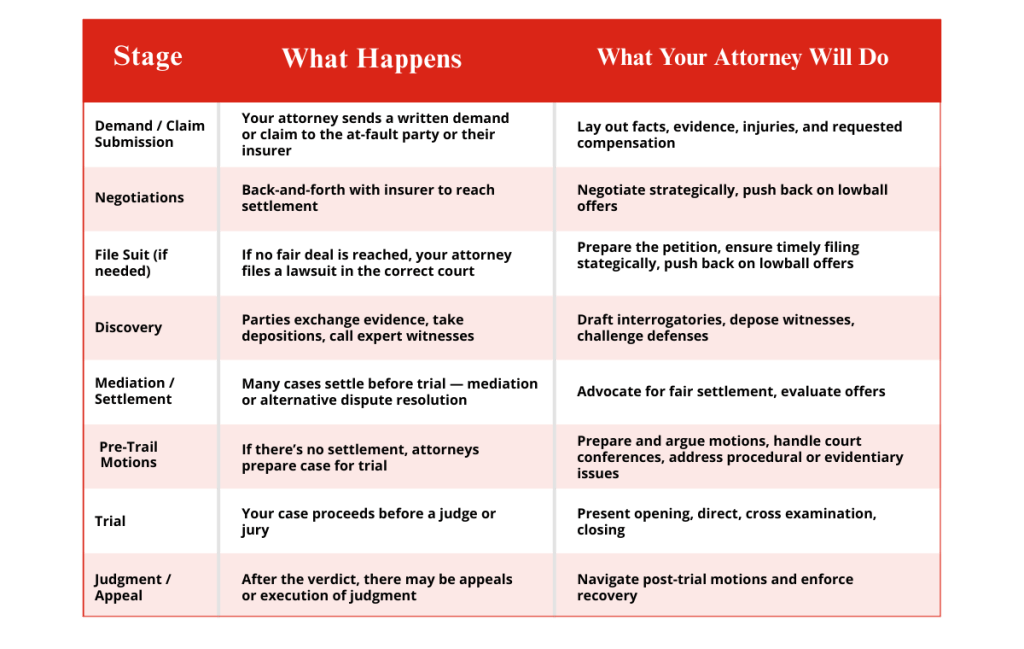
What to Do After You File
Filing your personal injury claim is just the beginning. How you act afterward can affect the strength and outcome of your case.
- Be responsive. Your attorney may need your help with documents, clarifications, or testimony. Prompt cooperation keeps your case moving smoothly.
- Avoid social media risks. Don’t discuss your accident or injuries online. Insurance companies and opposing parties often monitor posts closely.
- Stay on top of treatment. Follow your doctor’s recommendations carefully. Gaps or missed appointments can hurt your credibility and recovery.
- Let your attorney lead negotiations. Insurance companies may try to push quick settlements before all the evidence is clear. Trust your legal team to handle these discussions.
- Be patient. Serious injuries and complex cases take time. Months or even years can pass before resolution, but staying engaged and organized helps your case.
Types of Damages and What Can You Recover?
When you file a personal injury claim in Louisiana, the goal is to recover damages, a legal term for the money awarded to compensate you for your losses. Louisiana law allows recovery for both economic and non-economic damages, depending on the nature and severity of the injury.
- Economic damages are the measurable financial losses you’ve suffered as a result of your injury. These are typically proven through bills, pay stubs, and expert testimony about future costs. Common examples include medical expenses, lost wages, property damage, etc.
- Non-economic damages compensate for the physical and emotional impact of an injury — losses that don’t have a direct financial value but significantly affect quality of life. These may include pain and suffering, mental anguish, or the inability to participate in hobbies, social activities, or experiences you once enjoyed. Louisiana courts may use multipliers or other evaluative methods to help assess the value of non-economic damages, depending on the severity of the injury and the facts of the case.
In wrongful death cases, families may also recover for funeral expenses, loss of financial support, and loss of companionship.
Louisiana courts may use multipliers or other methods to value non-economic losses based on the severity and circumstances of the injury. While most personal injury claims have no damage caps, certain cases, like medical malpractice, are subject to limits under state law.
When Insurance Companies Are Involved
Most personal injury claims in Louisiana start with an insurance company, not a courtroom. Whether it’s an auto insurer, a property owner’s liability carrier, or a commercial policy, insurers play a major role in determining how and when claims are resolved.
- Filing an Insurance Claim: After an accident, the injured party typically submits a claim to the at-fault party’s insurance company. The insurer will then open an investigation, request documentation (such as police reports or medical records), and determine how much they believe the claim is worth.
- Adjuster’s Role: Insurance adjusters are trained to minimize payouts. They may offer quick settlements before the full extent of your injuries is known or suggest that your own actions contributed to the accident. It’s important to remember that the adjuster’s job is to protect the insurance company’s interests, not yours.
- Negotiation and Settlement: Most personal injury cases settle out of court, often after back-and-forth negotiations between your attorney and the insurance company. Having legal representation helps ensure you don’t accept a low settlement that fails to account for long-term costs like ongoing medical care or lost earning potential.
- Necessary Litigation: If negotiations stall or the insurer denies liability, your attorney may recommend filing a lawsuit to preserve your claim and pursue a fair outcome. Even after a suit is filed, many cases still settle before trial once the insurer sees the strength of the evidence.
Insurance companies often control the early stages of a personal injury case, but they don’t have the final say. Working with an experienced attorney helps level the playing field, ensuring your claim is properly valued and your rights are protected.
Why Legal Representation Matters
Navigating a personal injury claim in Louisiana isn’t just about paperwork — it’s about protecting your future. The rules around filing deadlines, fault, and damages can be confusing, and one misstep can cost you your case.
An experienced personal injury attorney ensures your claim is filed on time, accurately values your medical bills, lost wages, and pain and suffering, and handles insurance companies that often push for low settlements. They fight to make sure you aren’t left covering costs the responsible party should pay.
Key Takeaways
- Deadlines matter. Louisiana’s prescriptive periods are strict, and missing the correct filing deadline can permanently bar your claim.
- Insurance companies are powerful. Legal representation levels the playing field, giving you the best chance to get the compensation you deserve.
- Fault affects recovery. Louisiana’s pure comparative fault system reduces your damages based on your share of responsibility, so accurate fault assessment is crucial.
- Damages cover more than bills. Compensation may include medical expenses, lost wages, rehabilitation costs, pain and suffering, and loss of enjoyment of life.
- Act quickly and strategically. Prompt action ensures evidence is preserved, deadlines are met, and your case is positioned for the best possible outcome.
Morris Bart Personal Injury Lawyers
Founded in Louisiana and serving clients for over 40 years, Morris Bart has built a legacy of protecting the rights of injured individuals across the state. If you’ve been hurt — or even suspect you might have a claim — don’t wait. Time is critical. Contact the Morris Bart team today for a free case evaluation and let us help protect your rights and maximize your recovery.
Questions?Call 800-537-8185
to find a Morris Bart office near you.